When Is Training Really Complete? From Shared Material to Proven Readiness
Updated

Training often ends at the wrong moment. A file is shared, a module is marked complete, or an employee attends a session, and the organization moves on. Those activities matter, but they do not answer whether the person understood the content or is ready to use it.
Training readiness is the point at which an organization has enough evidence to make a reasonable decision about whether the learner can move forward, while recognizing that some skills still need coaching and practical observation.
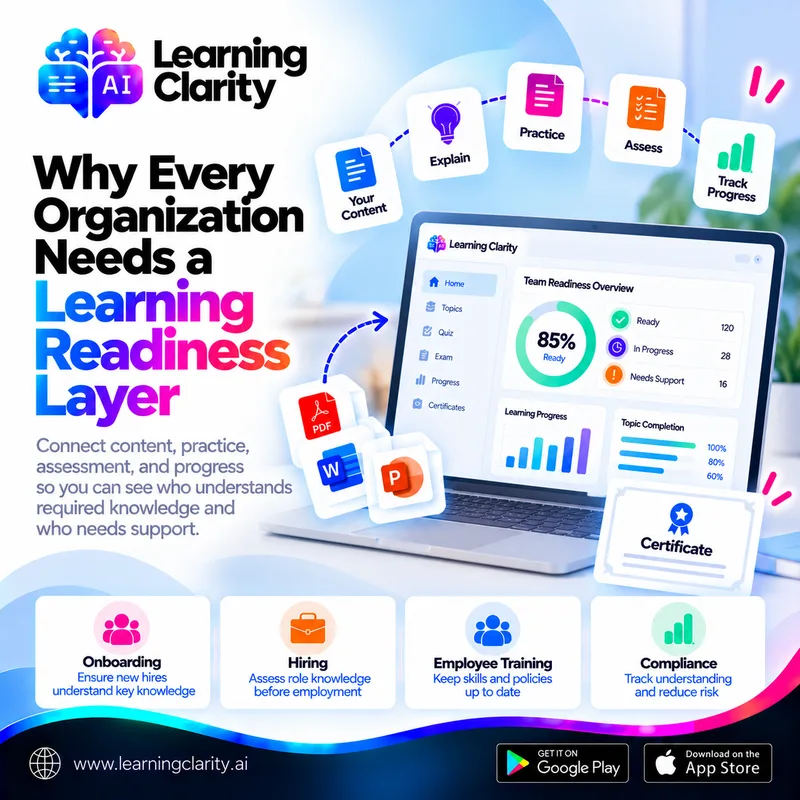
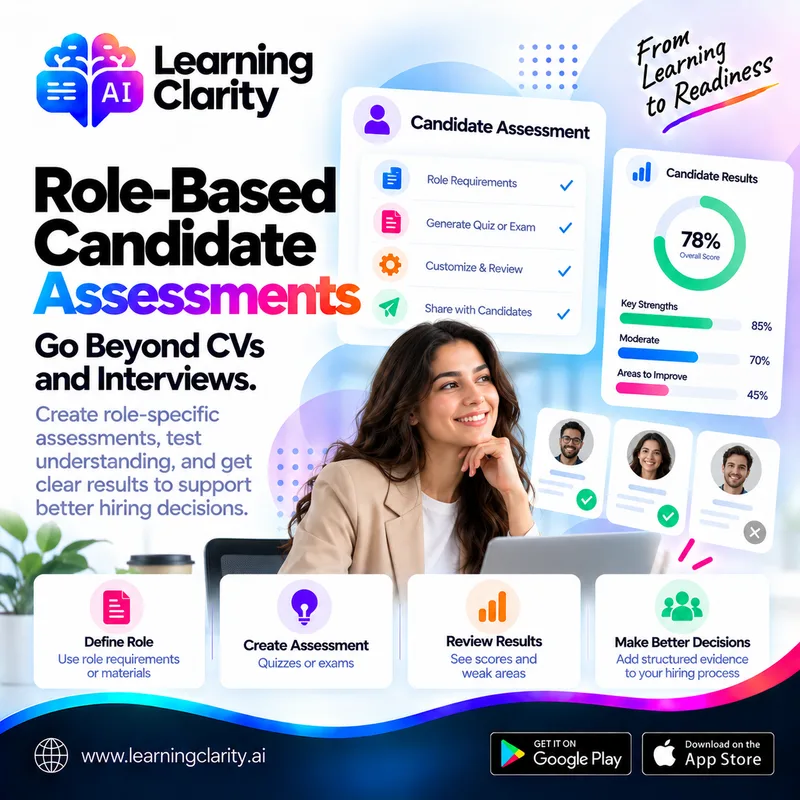
Learning Clarity can support this process by turning internal material into structured Topics with explanations, quizzes, exams, progress tracking, and certificates rather than treating content distribution as the end of the learning workflow.
Why Training Completion Is Not the Same as Readiness
Completion is an activity metric. It answers whether someone reached the end of an assigned task. Readiness is a learning question. It asks whether the person understood the required knowledge well enough for the next step.
A completion metric is still useful for administration, but it should not carry more meaning than it can support. An employee who completed a policy module may still need clarification. A new hire who opened every onboarding file may still be uncertain about a critical process.
What Should Happen After Material Is Shared?
A stronger workflow gives learners a chance to process the material, ask for clarification, practice retrieval, and complete an assessment that matches the learning objective. The result then feeds back into the next action: progress, review, or support.
The EEF feedback evidence reinforces the importance of linking performance information to learning goals and next steps. In workplace learning, that means results should help a manager or learner decide where additional practice or explanation is needed.
How Learning Clarity Creates a Training Workflow
Organizations can begin with existing policies, SOPs, onboarding documents, product guides, or training material. Learning Clarity can organize that content into Topics and Subtopics so the learner has a defined path rather than a loose collection of files.
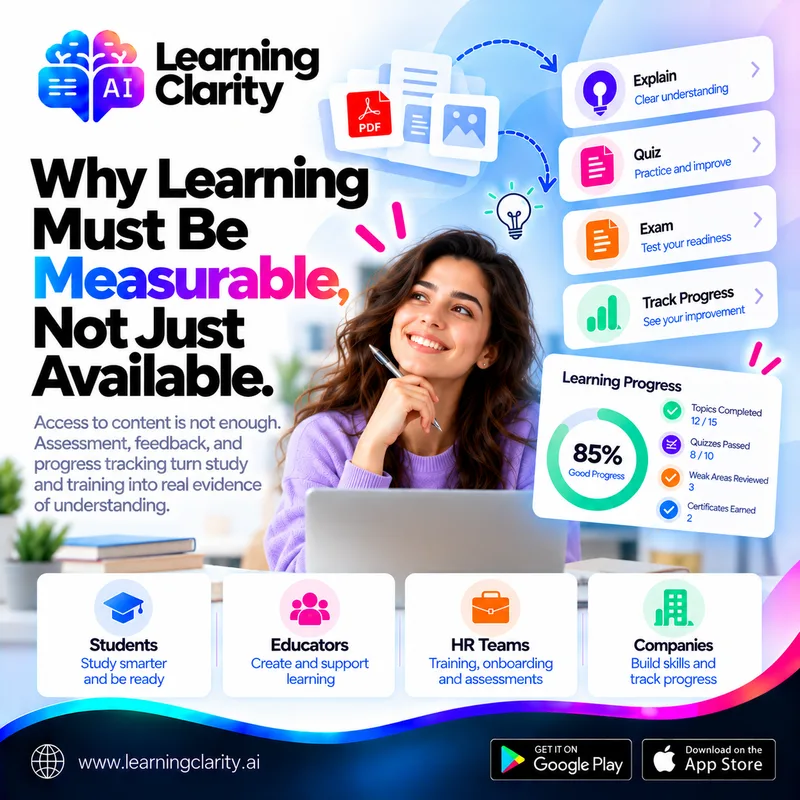
Explain Mode supports understanding, Quiz Mode provides practice, and Exam Mode can provide a more formal knowledge check. Progress tracking gives managers visibility into activity and results, while certificates can provide a completion artifact where appropriate.
Why This Matters During Onboarding
Onboarding is especially vulnerable to information overload. New employees are introduced to people, systems, policies, tools, processes, and role expectations in a short period. Simply sending more documents can make the problem worse.
The SHRM onboarding guide describes onboarding as a broader process of integrating employees and giving them the tools and information needed for the role. Structured learning can support the knowledge side of that process by spacing material, checking understanding, and showing managers where additional support is needed.
Practical Scenario: A Product Training Rollout
Imagine a company launching a new product. Instead of emailing a slide deck and asking employees to acknowledge receipt, the L&D team creates a Topic covering positioning, features, common questions, and escalation rules. Employees work through the explanations, take quizzes, and complete an exam before customer-facing responsibilities begin.
The assessment does not prove every employee will perform perfectly in a live customer conversation. It does provide evidence that the required knowledge has been covered and highlights who may need coaching before the rollout.
What Training Teams Should Measure
Useful measures include assignment completion, quiz attempts, exam scores, repeated weak areas, and progress through required Topics. Teams should also pay attention to where learners repeatedly need clarification, because that may signal a content-design problem rather than an individual performance problem.
The OECD research on skills use at work is a reminder that skills create value when they are actually used. Training metrics should therefore be connected, where possible, to the work context and the decisions managers need to make about support and readiness.
Common Mistakes in Training Measurement
One mistake is equating completion with competence. Another is using a single high-stakes exam when the content would benefit from smaller practice opportunities. A third is collecting large amounts of learning data without deciding how managers or learners should act on it.
Training design works better when every metric has a purpose. If a score will not change any decision or support action, it may not be worth collecting. If a critical concept matters, the assessment should make that concept visible.
Defining “Complete” for Each Training Topic
A simple way to stop treating distribution as completion is to define completion before the training is assigned. For each Topic, write down three things: which Subtopics must be finished, what assessment result is required, and what happens when a learner does not reach it — a review, a coaching conversation, or a second attempt.
The definition should match the risk of the material. A short product update may be complete once the learner has worked through the content and passed a quiz. A safety-critical procedure may need a formal exam and a practical check by a supervisor that no online assessment can replace. Being explicit about the difference helps managers avoid over-testing simple content and under-testing critical content.
Revisit the definition after the first group has finished. If almost everyone passes on the first attempt, the assessment may be too easy to show anything. If most learners miss the same questions, the explanation or the questions probably need revising before the next group starts.
Frequently Asked Questions
What is training readiness?
Training readiness is the point at which there is enough relevant evidence that a learner understands required knowledge to move to the next step, while recognizing that some skills also require practical observation.
Is course completion enough to prove understanding?
No. Completion confirms that an activity was finished. Quizzes, exams, discussion, or practical performance can provide additional evidence of understanding.
How can Learning Clarity support employee training?
Organizations can use Topics, Explain Mode, Quiz Mode, Exam Mode, progress tracking, supervision, and certificates to structure learning and review results.
Can Learning Clarity support onboarding?
Yes. Organizations can use internal onboarding material to create structured learning Topics and assessments for new employees.
Conclusion
Training is not complete simply because content has been delivered. The more useful finish line is clearer evidence that the learner understood the material, practiced it, and is ready for the next step.
To see how that workflow works with your own training content, start testing Learning Clarity and create a Topic from an existing policy, guide, or training document.
Try it with your own material
Create a free account and turn a document you already have into a structured Topic with explanations, quizzes and exams.
Create a free account