Why Every Organization Needs a Learning Readiness Layer
Updated
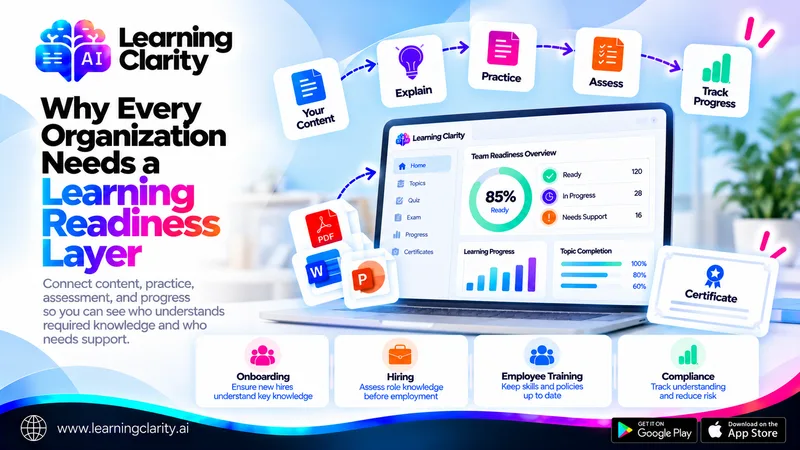
Most organizations already have a content layer. Policies live in SharePoint or a document system. Training decks sit in folders. Product guides, SOPs, onboarding checklists, and compliance material already exist. The missing layer is often what happens between “content available” and “person ready.”
A learning readiness layer is the structured process that connects content with explanation, practice, assessment, progress visibility, and next-step decisions. It does not replace the content system or the manager. It adds evidence around whether required knowledge has actually been learned.
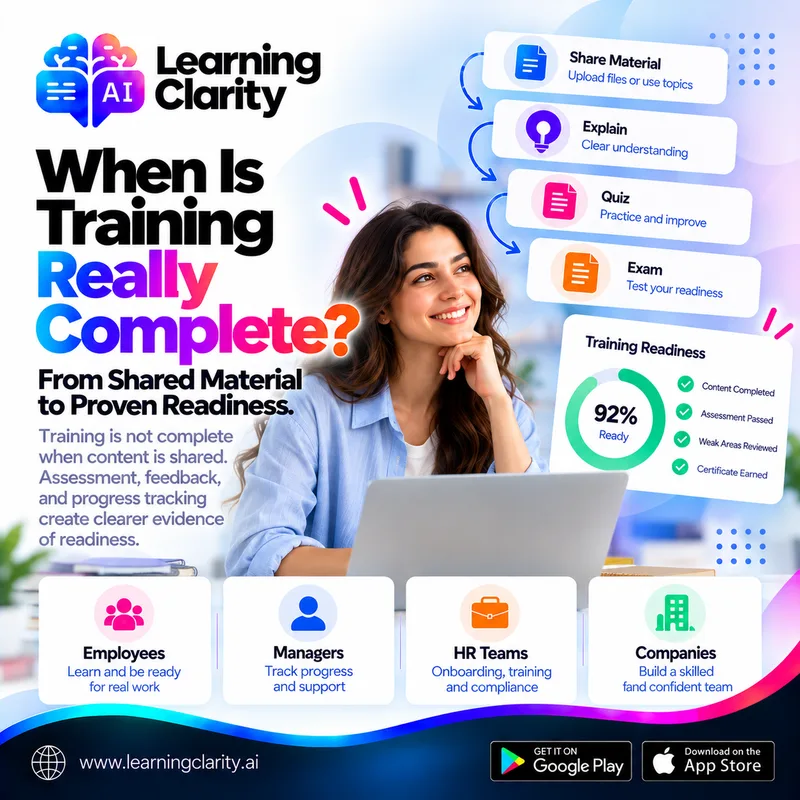
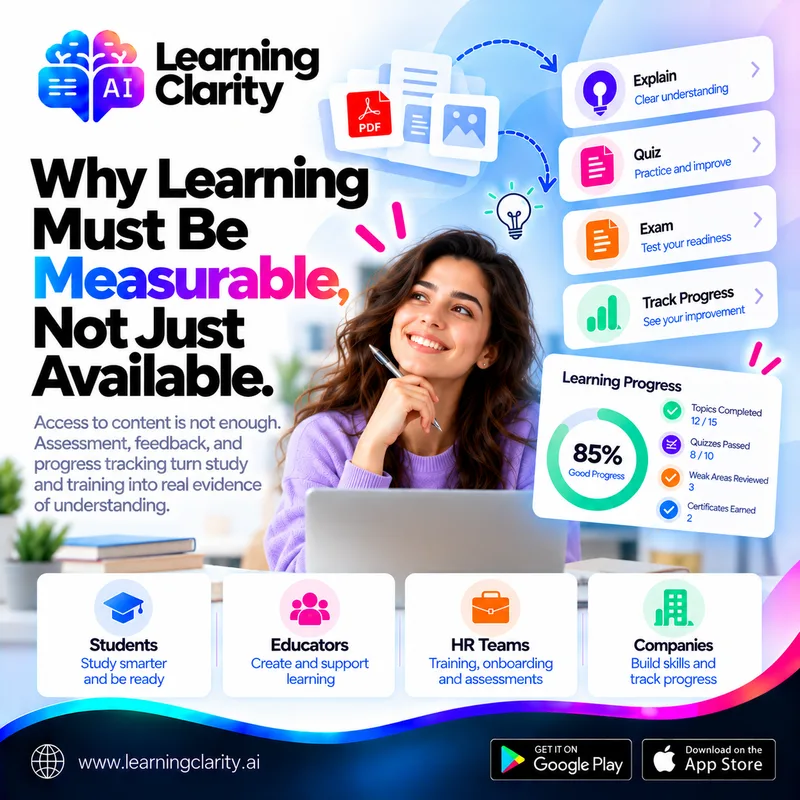
Learning Clarity can act as that layer by turning organizational material into structured Topics, then connecting those Topics with Explain, Quiz, and Exam modes, progress tracking, supervision, and certificates.
What Is a Learning Readiness Layer?
A learning readiness layer is a set of learning and assessment mechanisms that sits between information delivery and operational responsibility. Its purpose is to make knowledge requirements explicit, give learners a path to understand and practice them, and provide enough evidence for managers to decide whether more support is needed.
The term is useful because it separates two problems. Content management answers “where is the information?” Readiness management answers “has the person learned what they need from it?” Organizations often solve the first problem well and leave the second to informal judgment.
Why Content Repositories Are Not Enough
A content repository is essential for control, versioning, and access. But it is not designed to reveal learning. Sending a link, recording an acknowledgment, or tracking page views does not necessarily show whether the learner understands a critical procedure.
The OECD report on workplace skills use highlights the importance of not only developing skills but using them effectively at work. A readiness layer helps organizations connect training activity with a clearer view of knowledge before the learner is expected to apply it.
How the Readiness Layer Supports Onboarding
New employees face a dense mix of information during onboarding. A readiness layer can break the knowledge component into Topics and Subtopics, give the learner explanations and practice, and use exams as checkpoints before the employee takes on responsibilities that depend on that knowledge.
This complements the wider onboarding process described in the SHRM new employee onboarding guide. Managers still provide context, coaching, relationships, and hands-on experience; the learning platform makes required knowledge easier to structure and track.
How It Supports Hiring
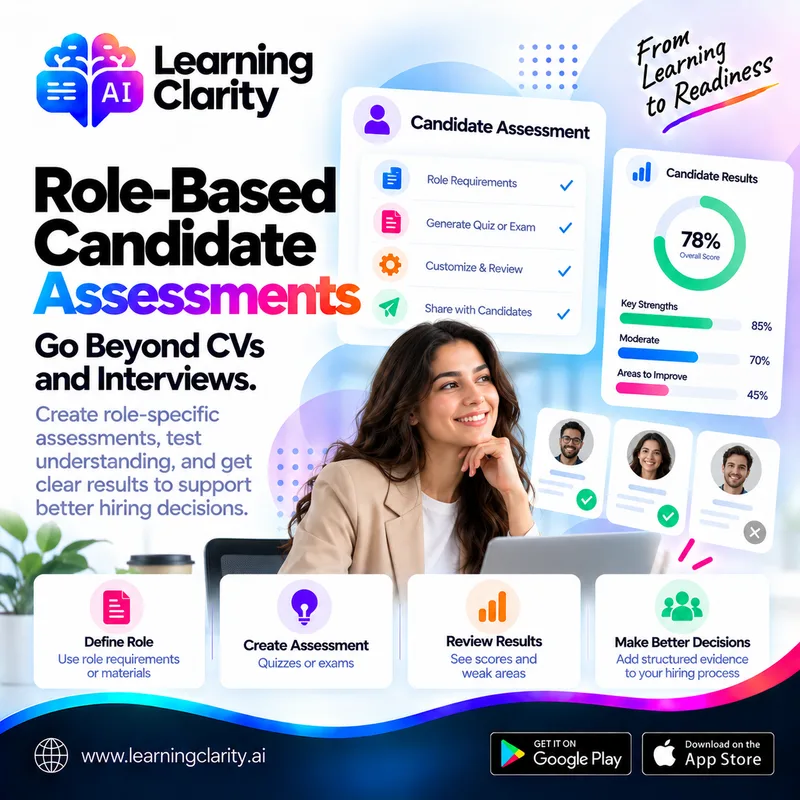
Before hiring, the same idea can be applied to role knowledge. HR teams can create assessments around defined requirements and use the results as one part of candidate evaluation. This is especially useful where the role requires knowledge that can be fairly tested before employment.
The CIPD selection methods factsheet recommends using appropriate assessment methods and describes skill-based assessment tasks alongside interviews and other selection tools. A Learning Clarity exam should be treated as one evidence source within that broader process.
How It Supports Ongoing Employee Training
After onboarding, the readiness layer can support product updates, policy changes, compliance refreshers, and capability development. Training content can be assigned in structured paths, while managers review completion and assessment evidence over time.
This creates a reusable operating model: define the required knowledge, publish the learning content, give learners a way to practice, assess understanding, review results, and provide additional support where needed.
Practical Scenario: A Policy Change Across Teams
Imagine a company changing an internal approval process. The policy document is updated centrally, but the change affects finance, operations, procurement, and managers differently. A readiness layer allows the organization to create role-relevant Topics, assign them to the right groups, and assess the knowledge that each group needs.
The learning team can see whether required content was completed and where assessment results suggest confusion. Managers can then focus follow-up conversations on the specific parts of the process that need attention.
Best Practices for Building a Readiness Layer
Start with the knowledge that genuinely matters to the role or task. Do not turn every document into a course. Keep learning paths focused, review generated assessments, and define what result is sufficient for the next step.
Use the data to trigger support, not just reporting. A weak score should lead to review, explanation, coaching, or another attempt. A strong score should still be interpreted in context when the real job requires practical demonstration.
Starting a Readiness Layer With One Process
A readiness layer does not have to be introduced across the whole organization at once. Choose one process where misunderstanding is costly and the knowledge is well documented — an approval workflow, a customer escalation procedure or a data-handling policy — and build the first Topic from the existing source material.
Assign clear owners before anything is published: someone responsible for the source content, someone who reviews the questions, and a manager who acts on the results. Agree what result counts as ready and what support follows a weak result. Then assign the Topic to one team and review completion and assessment evidence after the first cycle.
The pilot should answer practical questions: did the assessment reveal gaps the team did not know about, did managers act on the results, and did learners find the explanations useful? If the answers are positive, repeat the same pattern for the next process and reuse the ownership model instead of designing it again.
Frequently Asked Questions
What is a learning readiness layer?
It is a structured learning and assessment layer that connects organizational content with explanation, practice, assessment, progress visibility, and readiness decisions.
Does a readiness layer replace an LMS or document system?
Not necessarily. It can complement existing content and operational systems by focusing specifically on structured learning and evidence of understanding.
Can Learning Clarity support onboarding readiness?
Yes. Organizations can turn onboarding material into Topics, use quizzes and exams, and track learning progress and results.
Can a readiness layer be used before hiring?
It can support role-related knowledge assessment as one input in a broader recruitment process, alongside interviews, work samples, and human judgment.
Conclusion
Organizations rarely need more places to store content. They need a clearer bridge between content and readiness. That bridge is built through structure, practice, assessment, and visible progress.
To test a readiness-layer approach with your own material, start with Learning Clarity and turn one existing policy, onboarding document, or training guide into a structured Topic.
Try it with your own material
Create a free account and turn a document you already have into a structured Topic with explanations, quizzes and exams.
Create a free account