Learning Clarity for Individuals and Organizations: Two Learning Paths on One Platform
Updated
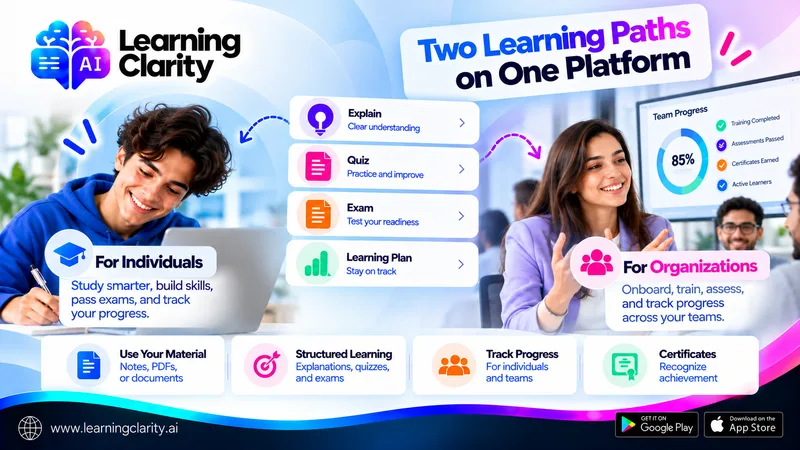
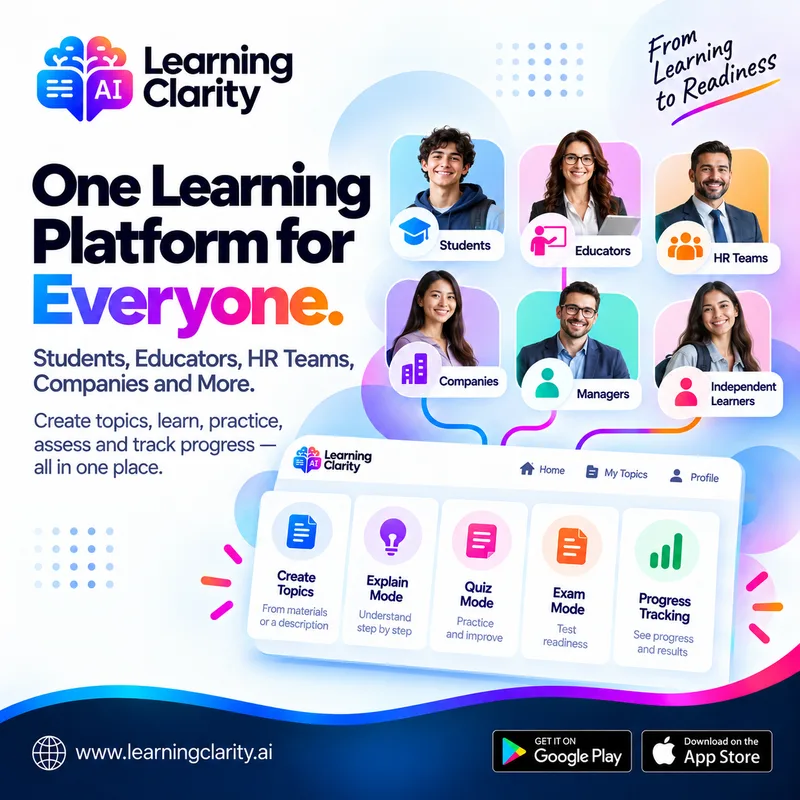
An individual learner and an organization rarely start with the same objective. One may want to pass an exam or learn a new skill. The other may need to onboard employees, assess candidates, deliver training, or track learning across a team.
Their goals are different, but the learning mechanics overlap: organize the material, understand it, practice, assess, review progress, and decide what comes next.
That is why a learning platform for individuals and organizations can use one core structure while supporting two distinct learning paths. Learning Clarity provides Topics, Explain Mode, Quiz Mode, Exam Mode, learning plans, progress tracking, supervision, and certificates that can be used differently depending on who is learning and why.
What Individuals Need From a Learning Platform
Individual learners usually need clarity and momentum. They may have plenty of resources but no clear sequence. They may not know whether they understand the material well enough to move on, or which area should receive the next hour of study.
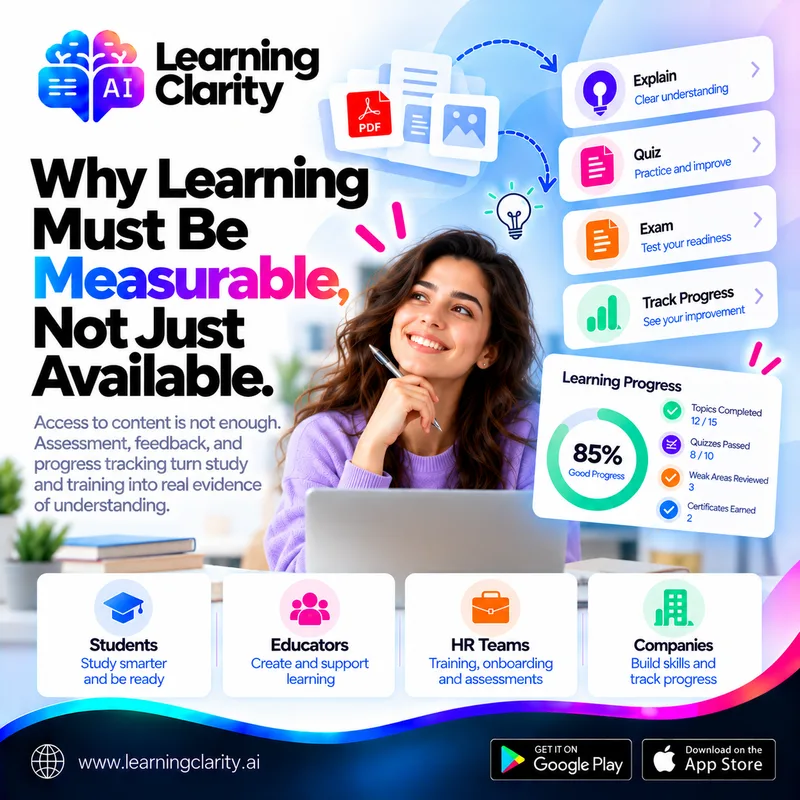
A useful platform therefore needs more than content generation. It should help the learner structure a Topic, understand difficult ideas, practice retrieval, check readiness, and return to weak areas. Progress should answer “what should I do next?” rather than simply show activity.
What Organizations Need From the Same Platform
Organizations have additional requirements: authoring, assignment, consistency, visibility, and accountability. They need to know what employees are learning, whether required training was completed, how assessments were performed, and where managers should intervene.
The OECD Trends in Adult Learning report provides useful context on continued adult learning as skills needs evolve. For organizations, the challenge is not only offering learning opportunities but making them relevant, structured, and manageable across different roles and teams.
How the Individual Learning Path Works
An individual can create a Topic from a description or supplied material, then use Explain Mode to work through the content. Quiz Mode adds practice, while Exam Mode gives the learner a more formal checkpoint. A learning plan can help structure a longer goal across multiple Topics.
Assessment is especially valuable when it is used as part of learning. The testing effect research describes how retrieval practice can strengthen later retention. This is why practice questions can be useful before the final exam, not only after the learner thinks they have finished studying.
How the Organizational Learning Path Works
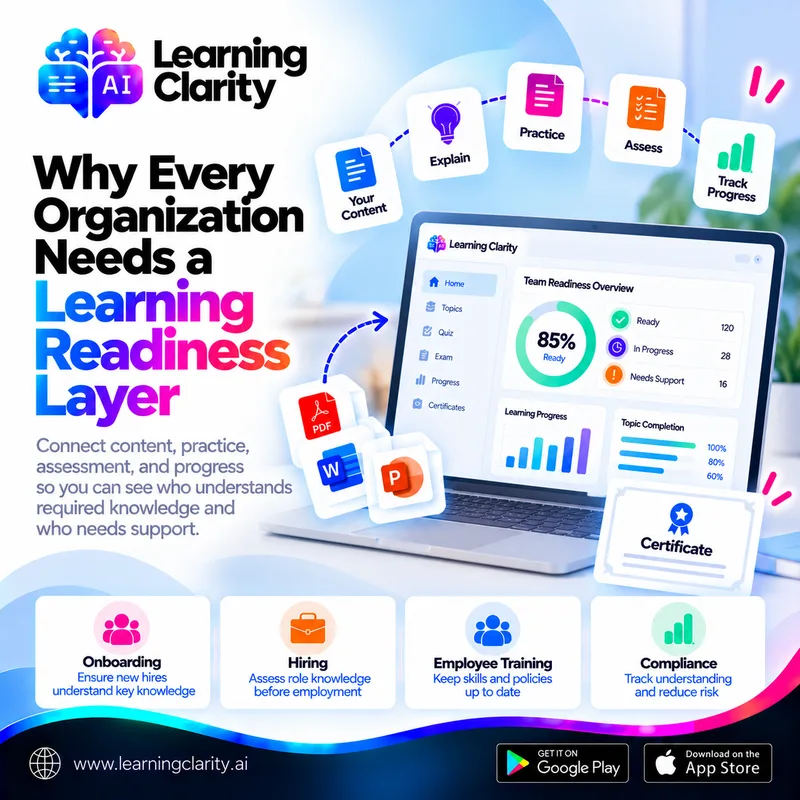
An organization can create Topics and Courses from training material, then assign that content to employees or units. The same Explain, Quiz, and Exam modes can be used, but the purpose is different: consistent onboarding, internal training, compliance knowledge, or professional development.
Managers and learning teams can use progress and assessment data to identify where support is needed. Certificates can provide a completion artifact for defined learning paths, while supervision can help authorized stakeholders follow progress without manually checking every learner.
Hiring and Onboarding as Connected Use Cases
For HR teams, Learning Clarity can support role-based assessments before hiring and structured learning after hiring. A role knowledge Topic can be used to test understanding during recruitment, while onboarding material can be turned into Topics for the successful candidate later.
The CIPD selection methods guidance is a useful reminder that selection should combine appropriate methods. The exam or quiz is one evidence source. Interviews, work samples, and human judgment remain important. After hiring, structured learning can then support the transition into the role.
Practical Scenario: One Skill, Two Contexts
Consider project management. An individual professional may create a Topic to prepare for a certification or strengthen knowledge of scheduling, risk, or stakeholder management. They study independently and use exams to check readiness.
A company may use similar concepts in an internal learning program for newly promoted project coordinators. The organization assigns Topics, tracks progress, and reviews assessment results. The content domain overlaps, but one path is self-directed and the other is managed learning.
Best Practices for Individuals and Organizations
Individuals should keep Topics focused, use quizzes as practice rather than only as scores, and revisit weak areas instead of repeating the entire subject. Organizations should define content ownership, review assessments before assignment, and decide how results will inform coaching or next steps.
Both groups benefit from the same principle: learning works better when the structure is clear and the assessment has a purpose.
Moving Between the Two Paths
Many people use both paths at different times. A professional may study independently for a certification and later join an organization that assigns structured training in the same field. A team lead may try the platform on their own before proposing it to a department. The underlying workflow — Topic, explanation, practice, assessment, progress — stays the same, which makes that transition easier.
What changes is who makes the decisions. On the individual path, the learner chooses the scope, the pace and when to take an exam. On the organizational path, authors and managers decide what content is assigned, what counts as completion and who can see the results. Learners should know which of their activity is visible to a supervisor and what their results will be used for.
For organizations considering a pilot, the individual path is a useful rehearsal. One person can create a Topic from existing training material, work through it as a learner would, and note where the explanations or questions need adjusting. That review happens before anyone is assigned the content, so the organizational rollout starts from material that has already been tested.
Frequently Asked Questions
Can individuals use Learning Clarity for self-study?
Yes. Individuals can create Topics, learn through explanations, practice with quizzes, take exams, follow learning plans, and track progress.
Can organizations assign training in Learning Clarity?
Learning Clarity supports organizational content structures such as Topics, Courses, and Learning Plans, along with assignment and progress-related workflows.
Is the platform only for students?
No. Learning Clarity can support students, professionals, independent learners, HR teams, L&D teams, and organizations.
Can the same material be used for assessment and learning?
Yes, when appropriate. Material can inform a structured Topic, and relevant quizzes or exams can be used to check understanding.
Conclusion
Individuals and organizations need different controls, but they share the same learning fundamentals. Structure, explanation, practice, assessment, and progress visibility matter whether the learner is preparing alone or completing assigned training.
Explore both paths by creating a free Learning Clarity account and starting with a Topic that reflects your own learning or training goal.
Try it with your own material
Create a free account and turn a document you already have into a structured Topic with explanations, quizzes and exams.
Create a free account