Why More Content Does Not Solve Learning Problems
Updated
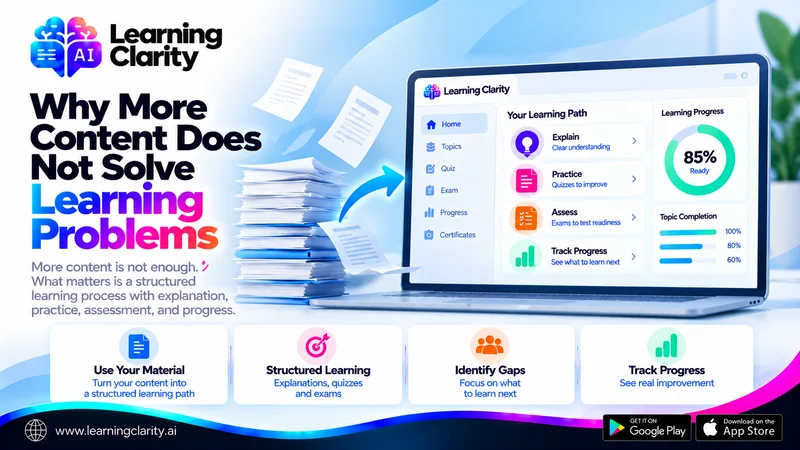
When learners struggle, the default response is often to give them more material: another PDF, another video, another presentation, another link. Sometimes more information is necessary, but often the real problem is not the amount of content. It is the absence of a learning process around that content.
Good learning requires the learner to identify what matters, understand it, retrieve it, test it, and revisit what was missed. A large library can support that process, but it cannot replace it.
Learning Clarity is built around a structured workflow that connects Topics with explanations, quizzes, exams, and progress tracking so learners can do more than collect information.
Why Content Volume Can Become a Distraction
More material can create a false sense of productivity. Learners may spend time organizing resources, highlighting documents, or watching explanations without ever checking whether the knowledge can be recalled. The result is high activity with uncertain learning.
The solution is not to make content scarce. It is to make the path through the content clearer. A Topic should define what the learner is trying to understand, what practice will help, and what evidence will indicate readiness.
Retrieval Practice Changes the Learning Dynamic
Reading is useful for exposure and understanding, but retrieval asks the learner to produce an answer without simply looking at the source. That process creates information about what is actually available from memory.
The testing effect research summarizes evidence that testing can improve later retention compared with additional study alone. This is why a quiz is not only a measurement device; it can be an active part of the learning process.
Feedback Turns Mistakes Into Direction
A learner who gets an answer wrong has learned something important about their current understanding. The next question is whether the system helps them act on that information.
The EEF feedback evidence emphasizes the value of feedback that is linked to goals and provides useful next steps. In a structured workflow, weak areas should point the learner back to relevant content rather than leaving them with an unexplained score.
How Learning Clarity Structures Existing Material
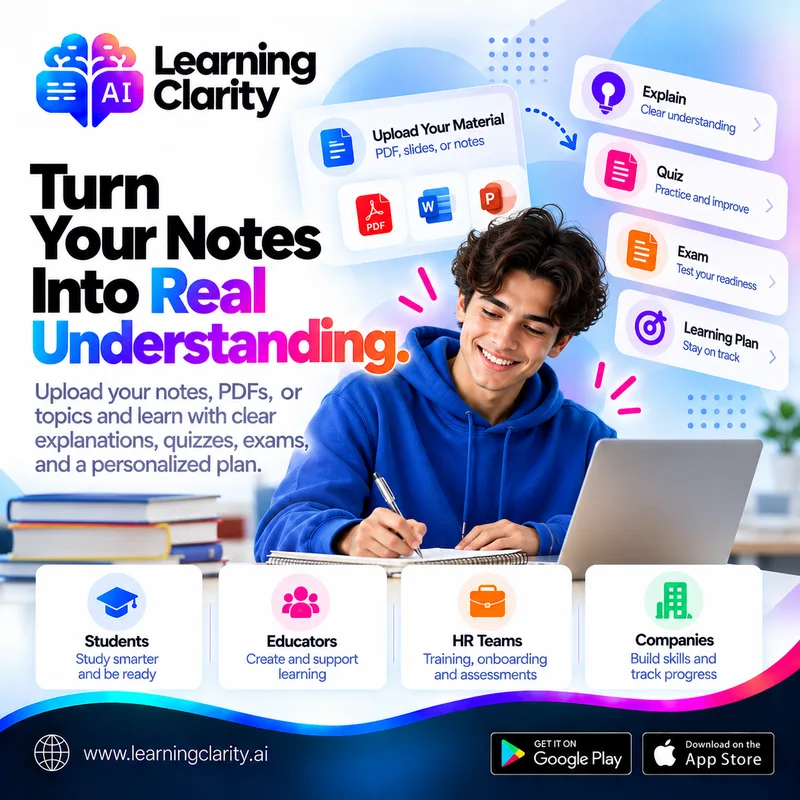
Learning Clarity can create a Topic from supplied material or a written description. Instead of treating the source as the final learning experience, the platform organizes it into subtopics and connects it with learning modes.
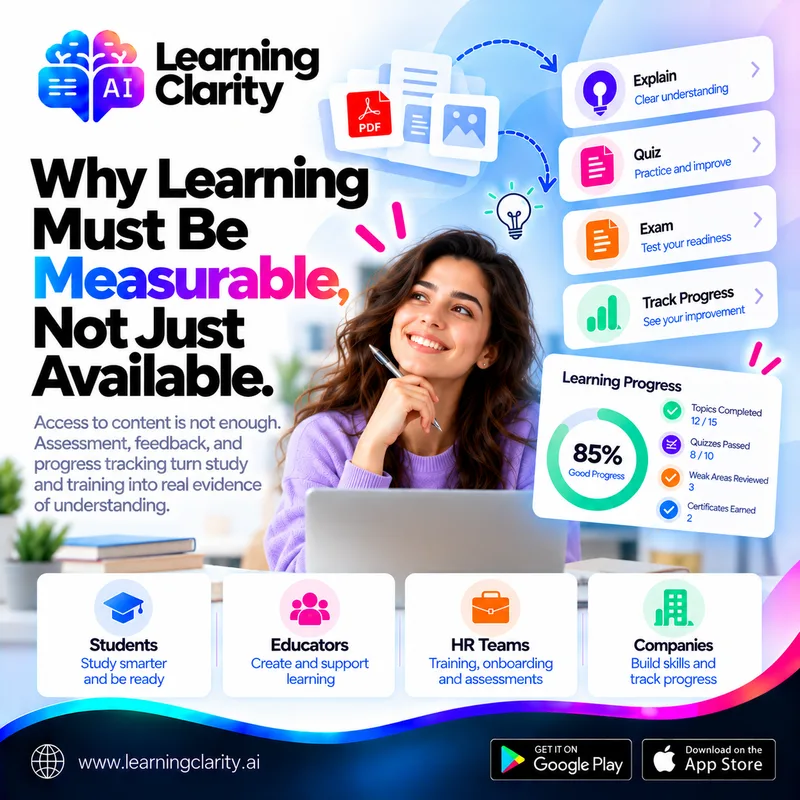
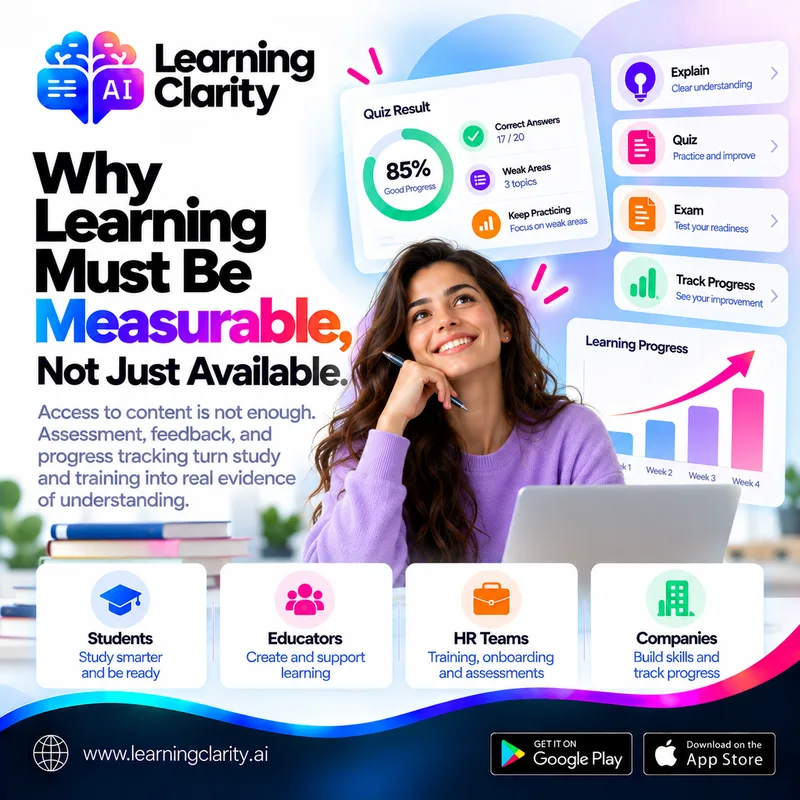
Explain Mode supports understanding, Quiz Mode creates practice, Exam Mode provides a readiness checkpoint, and progress tracking makes the learning history visible. The focus shifts from “how much content do I have?” to “what do I understand and what should I do next?”
Practical Scenario: The Overloaded Student
A student preparing for a difficult exam may have lecture slides, a textbook, several online videos, and classmates sharing additional notes. The volume of material makes it harder to decide what to study first. By creating a Topic from the core material, the student can work through a defined sequence and use quizzes to identify weak areas before taking a practice exam.
The benefit comes from prioritization. The platform does not make the source material disappear; it gives the learner a way to convert it into a study process.
Practical Scenario: The Overloaded New Hire
The same problem appears in onboarding. A new employee may receive dozens of files during the first week. Instead of relying on the employee to decide what is important, the company can create structured Topics around policies, systems, product knowledge, and role procedures.
The OECD Trends in Adult Learning report provides broader context for the continuing importance of adult learning. In the workplace, the quality of the learning path matters as much as access to resources.
Best Practices for Turning Content Into Learning
Select the minimum content needed for the objective, organize it around meaningful subtopics, and add practice that matches the decisions or knowledge learners will need. Use assessments to identify priorities, not merely to generate scores.
If learners repeatedly miss the same concept, examine the explanation as well as the learner. Sometimes a pattern of weak results is evidence that the content itself needs to be clarified or restructured.
A Simple Test Before Adding More Material
Before adding another resource, ask what the learner would do with it. If the answer is “read it as well”, the new material is likely to add volume rather than understanding. If the answer is “use it to understand the Subtopic they keep getting wrong”, it may be exactly what is needed.
Quiz and exam results make that question answerable. When results show a specific weak area, look first at the explanation already provided for it. A different explanation, a worked example or a few more practice questions on that Subtopic often help more than a new document that covers the whole subject again.
The same test works for organizations planning training updates. Instead of sending a longer version of the material after a poor result, identify which concepts were missed and revise those parts. The content library stays smaller, and every addition has a reason that can be traced back to evidence.
Frequently Asked Questions
Why does more content not always improve learning?
Because access and exposure do not guarantee retrieval, understanding, or application. Learners need structure, practice, assessment, and feedback.
What is retrieval practice?
Retrieval practice is the act of recalling information from memory, often through questions or tests, rather than simply reviewing the source again.
How can Learning Clarity help with content overload?
Learning Clarity can turn supplied material into structured Topics and connect it with explanations, quizzes, exams, and progress tracking.
Should learners stop using books, PDFs, or videos?
No. Those resources remain valuable. The goal is to place them inside a clearer learning workflow rather than relying on passive exposure alone.
Conclusion
Learning problems are not always information problems. Often the missing piece is a process that turns information into understanding, practice, evidence, and next steps.
If you already have the material but need more structure, try Learning Clarity with one topic and build a learning path around what you already use.
Try it with your own material
Create a free account and turn a document you already have into a structured Topic with explanations, quizzes and exams.
Create a free account